
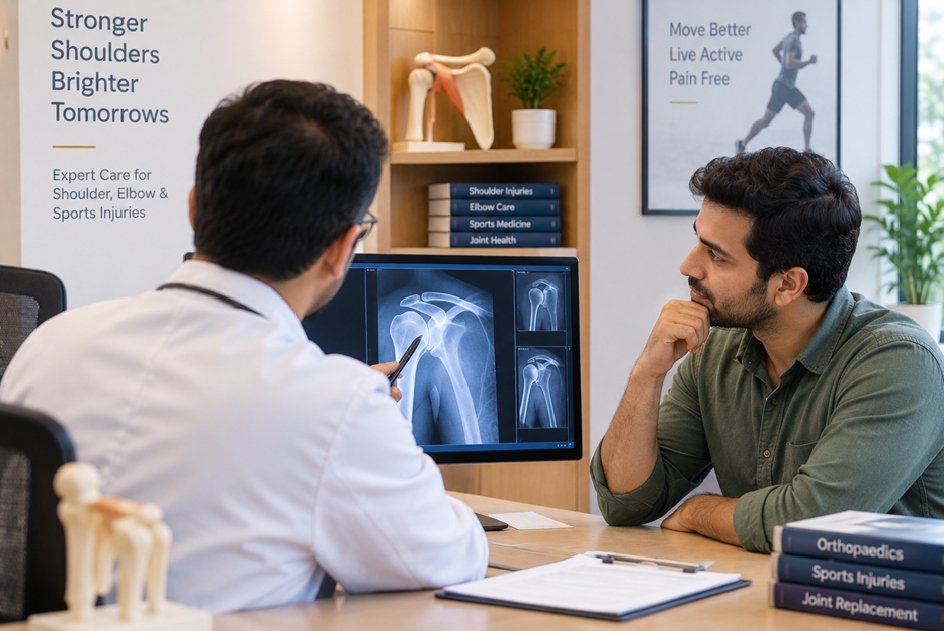
Searching “orthopedic surgeon near me” usually means one thing: something hurts, and you want to see the right person quickly. But proximity alone doesn’t tell you whether a surgeon is the right fit for your specific joint problem.
This guide covers what actually matters when choosing an orthopedic specialist in Delhi – from qualifications to sub-specialization – so you can make an informed decision instead of picking based on distance alone.
What Should You Actually Look for in an Orthopedic Surgeon Near You?
The right orthopedic surgeon for you combines four things: relevant qualifications, hands-on experience with your specific joint or injury type, a hospital or clinic set up for proper diagnostics, and clear, honest communication about your options.
Location matters for convenience, especially for follow-up visits and physiotherapy sessions, but it shouldn’t be the deciding factor. A slightly longer commute to see a surgeon who regularly treats your specific condition is usually worth it over a nearby generalist who sees it only occasionally.
Before booking, it helps to know what kind of orthopedic problem you’re dealing with, since that changes which qualifications and experience actually matter most for your case.
Why Does Specialization Matter When Choosing an Orthopedic Doctor in Delhi?
Orthopedics covers a wide range of conditions – spine, hip, knee, shoulder, hand, and trauma – and most orthopedic surgeons in Delhi develop deeper expertise in a smaller subset of these over their career, even if their general degree covers the whole field.
A surgeon who primarily manages knee replacements and a surgeon who focuses on shoulder arthroscopy both hold the same base qualification, but their day-to-day case volume, technique familiarity, and outcomes data differ meaningfully by joint. Asking directly about a surgeon’s specific area of focus is a completely reasonable question, not an awkward one.
This is especially relevant for shoulder problems, since shoulder anatomy and arthroscopic technique are different enough from knee or hip work that many orthopedic surgeons in Delhi choose to concentrate specifically on the shoulder and upper limb.
When Should You See a Shoulder Specialist in Delhi Specifically?
You should consider a shoulder specialist if pain is localized to the shoulder, limits overhead movement, followed a fall or sports injury, or has lasted more than a few weeks without improving on its own.
Common conditions that call for a shoulder-focused evaluation include rotator cuff tears, frozen shoulder (adhesive capsulitis), shoulder instability or repeated dislocations, and SLAP or labral tears, often seen in athletes, gym-goers, and people who do repetitive overhead work.
Not every shoulder ache needs a specialist visit immediately – many mild strains improve with rest and basic care – but pain that’s severe, recurring, or accompanied by visible deformity or loss of movement is worth getting properly evaluated rather than waiting it out.
What Credentials Should You Verify Before Choosing an Orthopedic Surgeon?
At minimum, confirm the surgeon holds a postgraduate qualification in orthopedics (MS or DNB Orthopaedics) and is registered with the National Medical Commission or the relevant state medical council, which you can verify through official medical council records.
Beyond the base qualification, additional fellowship training in a specific area – such as shoulder and elbow surgery, sports medicine, or joint replacement – indicates focused, advanced experience in that particular field, on top of general orthopedic training. Hospital affiliation also matters, since it tells you what imaging, operating theatre, and post-operative facilities are actually available if surgery becomes necessary.
For context, Dr. Naman Wahal completed his MS in Orthopaedics from AIIMS, New Delhi, followed by advanced fellowship training in shoulder and elbow surgery at ATOS Klinik, Munich, and currently practices as Senior Consultant in Orthopaedics & Shoulder Surgery at Fortis Escorts Hospital, alongside directing StepUp Joints in Lajpat Nagar – the kind of combination worth checking for regardless of which surgeon you eventually choose.
Non-Surgical vs. Surgical Orthopedic Care: What’s the Real Difference?
Most joint and shoulder problems improve with non-surgical care first – activity modification, physiotherapy, medication, or targeted injections – and surgery is generally considered only when these options haven’t worked or when scans show clear structural damage that needs repair.
A good orthopedic consultation should walk you through this full range of options in order, not jump straight to discussing surgery. If a surgeon recommends an operation at the very first visit without first trying or seriously discussing conservative management, it’s reasonable to ask why, or to get a second opinion.
This staged approach protects you from unnecessary procedures and also means that seeing a specialist early – even for what feels like a minor issue – often means avoiding surgery altogether, since problems caught early respond better to non-surgical treatment.
Multi-Specialty Hospital or Dedicated Joint Clinic – Which Do You Need?
A multi-specialty hospital setup is generally the better choice for trauma, fractures, or cases that might need same-day imaging, anesthesia support, or inpatient care, since everything is available under one roof.
A dedicated joint and rehabilitation clinic often works well for planned consultations, physiotherapy-focused recovery, and follow-up care after the acute phase is over, since these clinics are usually built around a more continuous, hands-on rehab process. Many orthopedic surgeons in Delhi, including those specializing in shoulder and sports injuries, split time between both settings for exactly this reason – hospital-based care for surgery and acute cases, and clinic-based care for evaluation and rehab.
Knowing which setting fits your current stage of injury or recovery helps you plan appointments more efficiently, especially if physiotherapy will be part of your treatment.
What Questions Should You Ask During Your First Consultation?
A first orthopedic consultation goes better when you come prepared. Useful questions to ask include:
- What is causing my specific pain, based on today’s examination and any scans?
- What non-surgical options exist before surgery is even considered?
- How many similar cases do you typically manage in a year?
- What does the recovery timeline realistically look like for my situation?
- What are the risks and limitations of any suggested procedure?
- Where would the procedure, if needed, actually be performed?
Asking these questions isn’t confrontational – a good orthopedic surgeon expects and welcomes them, since informed patients tend to follow through on recovery plans more consistently.
How Location Affects Your Orthopedic Care in Delhi/NCR
For an initial consultation, location matters less than getting to the right specialist. But once treatment or physiotherapy begins, proximity becomes genuinely important, since recovery often involves multiple follow-up visits over several weeks or months.
If you’re based in South Delhi – areas like Lajpat Nagar, Okhla, Greater Kailash, or Defence Colony – having a specialist with a presence in that part of the city can meaningfully reduce the friction of sticking to a physiotherapy or follow-up schedule. This is one practical reason many patients search specifically for “orthopedic surgeon near me” rather than just searching city-wide.
Whichever specialist you choose, confirming both their hospital-based and clinic-based locations upfront helps you plan a realistic, sustainable recovery schedule rather than one that gets derailed by logistics.
Choose Based on Fit, Not Just Proximity
The right orthopedic surgeon for you is the one whose specific experience matches your joint and condition, who talks you through non-surgical options honestly, and whose clinic locations fit your actual recovery routine – not simply whoever shows up first in a search.
If you’re dealing with shoulder pain, a sports injury, or joint discomfort in the South Delhi area, you can book a consultation with Dr. Naman Wahal at Fortis Escorts Hospital, Okhla, or StepUp Joints, Lajpat Nagar, or browse the full range of conditions treated to see if your specific concern is covered.
Frequently Asked Questions
How do I find a good orthopedic surgeon near me in Delhi?
Start by identifying your specific problem area (shoulder, knee, spine, etc.), then verify the surgeon’s postgraduate qualification, any relevant fellowship training, and hospital affiliation before booking a consultation.
What is the difference between an orthopedic surgeon and an orthopedist?
In practice, the terms are used interchangeably in India. Both refer to a doctor with an MS or DNB in Orthopaedics qualified to diagnose and treat bone, joint, and muscle conditions, including surgery when needed.
Do I need a shoulder specialist, or will a general orthopedic surgeon do?
For straightforward cases, a general orthopedic surgeon is often sufficient. For rotator cuff tears, recurrent dislocations, or complex shoulder arthroscopy, a surgeon specifically experienced in shoulder and upper-limb surgery is generally a better fit.
Is arthroscopic (keyhole) shoulder surgery painful?
Arthroscopic procedures are generally less painful and have shorter recovery times than open surgery, since they use small incisions, but some post-operative discomfort and a structured rehabilitation period are still expected.
How soon can I return to sports after shoulder surgery?
Recovery timelines vary by procedure and individual healing, ranging from a few weeks for minor arthroscopic work to several months for reconstructive procedures like rotator cuff repair, so ask your surgeon for a timeline specific to your case.
Do all joint or shoulder injuries need surgery?
No. Most joint and shoulder problems respond well to non-surgical treatment such as physiotherapy, activity changes, or injections. Surgery is typically considered only when conservative care hasn’t worked or structural damage is confirmed on imaging.
Dr. Naman Wahal Senior Consultant, Orthopaedics & Shoulder Surgery – Fortis Escorts Hospital, Okhla Director – StepUp Joints, Lajpat Nagar, New Delhi Book a Consultation
